Contact:
 Email:
Your steering pulls left on the motorway. The car shudders past 80. Your front tyres are worn on one edge but fine everywhere else. Three problems. Two causes. One very common mix-up.
Most Auckland drivers book wheel balancing when they need alignment, or vice versa, and end up back at the workshop a month later. This guide settles it.
Quick Summary
Wheel alignment adjusts the angles at which your wheels sit relative to the road. Wheel balancing corrects uneven weight distribution in the tyre and wheel assembly. Different problems. Different fixes. Both matter.
Quick Comparison: Wheel Alignment vs Wheel Balancing
| Feature | Wheel Alignment | Wheel Balancing |
| Main Purpose | Adjusts wheel angles to factory spec | Corrects uneven weight in the tyre and wheel |
| Common Symptoms | Pulling, uneven tyre wear, off-centre steering | Vibration, shaking at speed, patchy wear |
| How It’s Fixed | Adjusting camber, toe, and caster angles | Adding wheel weights to the rim |
| When to Do It | After impacts, new tyres, or every 12 months | With new tyres, every tyre rotation, or when vibration starts |
What Is Wheel Alignment?
Wheel alignment is a suspension system adjustment. The technician does not move the tyres. They adjust the suspension components to bring your wheel angles back to the specifications set by the vehicle manufacturer.
Camber, Toe, and Caster
Three angles determine alignment. Camber is the tilt of the wheel viewed from the front. Toe is how much the tyres point inward or outward from above. Caster is the angle of the steering axis viewed from the side. Each one affects how your tyres wear and how the car steers.
Alignment Process
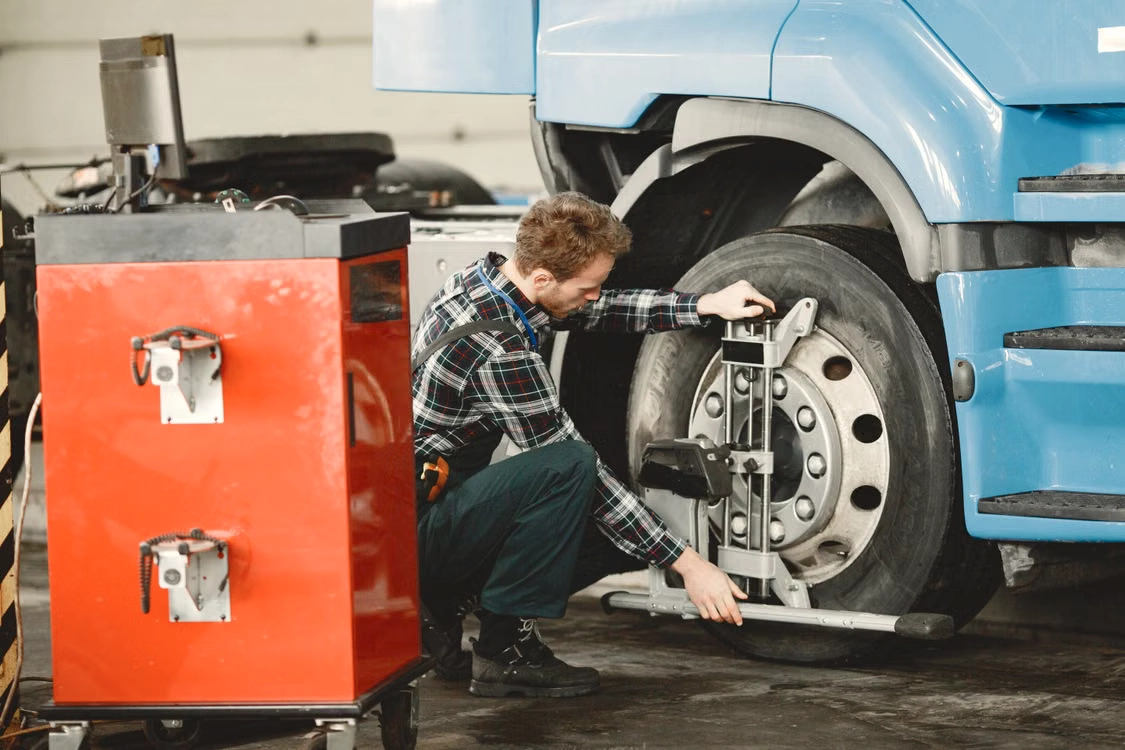
A technician attaches sensors to each wheel and reads the angles on a computerised display. They adjust the suspension components until everything matches factory spec. A front-end alignment takes 30 to 60 minutes. A four-wheel alignment service in Auckland covers all four wheels and is the right choice for most modern vehicles.
What Is Wheel Balancing?
Wheel balancing corrects weight imbalances in the tyre-wheel combination. Even brand-new tyres are not perfectly uniform-small weight differences cause the wheel to spin unevenly, creating vibration and stressing suspension components.
Weight Distribution
A technician puts the tyre and wheel on a balancing machine, which spins it to find where the weight is off. Small wheel weights are then attached to the rim at precise points to counterbalance the imbalance.
Balancing Process
Smooth spin. No vibration. Done. Professional wheel balancing should be part of every tyre fitting appointment.
Signs You Need Wheel Alignment
Misalignment produces clear, consistent signs. These are the ones to watch for.
1. Vehicle Pulling
A car that drifts or pulls to one side on a straight road is a textbook example of an alignment problem. Uneven wheel angles create a directional bias that the driver must constantly correct.
2. Uneven Tyre Wear
Tyres wearing faster on one edge than the other, especially on the inner or outer shoulder, points directly to wheel misalignment. Even tyre contact across the full tread is what correct alignment delivers.
3. Off-Centre Steering
A steering wheel that sits off-centre when driving straight is another alignment indicator. Especially obvious on long, flat sections of Auckland roads where the wheel should sit square.
Signs You Need Wheel Balancing
If you’re noticing these signs, you need wheel balancing.
1. Steering Vibration
Steering wheel vibration within a particular speed range is a balancing issue, not an alignment issue. It typically appears between 80 and 100 km/h and may ease off at higher or lower speeds.
2. Speed-Related Shaking
Whole-car shaking rather than just the steering wheel suggests the rear wheels are imbalanced. If the shaking changes intensity with speed, it is almost certainly a balancing problem.
3. Patchy Tyre Wear
Cupping or scalloped patches of wear, distributed unevenly around the tread point, indicate imbalance rather than misalignment: different pattern, different cause, different fix.
When to Book Alignment or Balancing
A few situations call for both services at once.
1. After New Tyres
Every time new tyres are fitted, check alignment and balance together. New tyres do not fix existing misalignment, and skipping the balance means vibration from kilometre one.
2. After Road Impacts
One solid hit into a pothole, kerb, or road debris on Auckland roads can knock alignment out and disturb wheel balance at the same time. Any meaningful road impact is enough to warrant both being checked.
3. Routine Servicing
Wheel alignment should be part of regular vehicle maintenance, at a minimum annually or every 15,000 km. Wheel balancing should be done with every tyre rotation or whenever vibration is detected.
Why Alignment and Balancing Matter
Both services deliver more than comfort improvements.
1. Tyre Life
Misaligned or imbalanced wheels destroy tyres faster than almost anything else. As Kobis Farley notes at Tyre Safety NZ, “misaligned wheels can increase rolling resistance, which means your car has to work harder to move forward.
This can lead to increased fuel consumption. Proper alignment and balanced tyres protect tyre lifespan and cut replacement costs.
2. Driving Comfort
Constant vibration wears you down. Pulling that requires ongoing steering corrections, which is fatiguing, particularly in New Zealand’s varied driving conditions. Correct alignment and balancing restore the smooth driving experience that the car was built to deliver.
3. Road Safety
Misalignment and imbalance reduce vehicle stability and steering control at the worst possible moments. The NZTA Warrant of Fitness requirements include tyre condition as part of the inspection, and poor wheel maintenance contributes directly to road safety failures.
Conclusion
If your car is pulling, vibrating, or wearing tyres unevenly, the right call is a proper assessment. Car mechanics in Auckland can identify whether you need alignment, balancing, or both before the problem costs you a new set of tyres.
No. Wheel alignment adjusts the angles at which your wheels meet the road, which affects steering and tyre wear. Wheel balancing corrects uneven weight in the tyre and wheel assembly, which causes vibration. Two separate jobs.
Yes. New tyres do not correct existing misalignment. Fit them without checking alignment, and they will wear unevenly from day one.
That is almost always a wheel-balancing issue. Uneven weight distribution in the tyre and wheel causes the wheel to spin erratically at speed. Wheel weights applied to the rim at the right points fix it.
Yes. When the tyre contacts the road at the wrong angle, it wears faster on one side. Left long enough, misalignment ruins a set of tyres well before their time.
Often, yes. Fitting new tyres is the natural time to do both. A wheel alignment service in Auckland inspection will confirm what is actually needed before any work starts.